



Prividium in Japan: a full stack platform for the world's most deposit-rich banking system
Prividium and NexBridge are bringing private, institution-controlled blockchain infrastructure to Japan, connecting regulated digital assets to Ethereum.

Published Apr 2, 2025
ZKsync has achieved EVM equivalence with EVM Interpreter:
EVM bytecode interpreter features:
When Matter Labs started working on ZKsync Era, achieving full EVM compatibility in a general-purpose ZK rollup was widely viewed as a major technical challenge. There were no existing general-purpose ZK virtual machines or open-source circuits for proving Ethereum opcodes. The team had to build everything from scratch, making trade-offs to bring ZKsync to production.

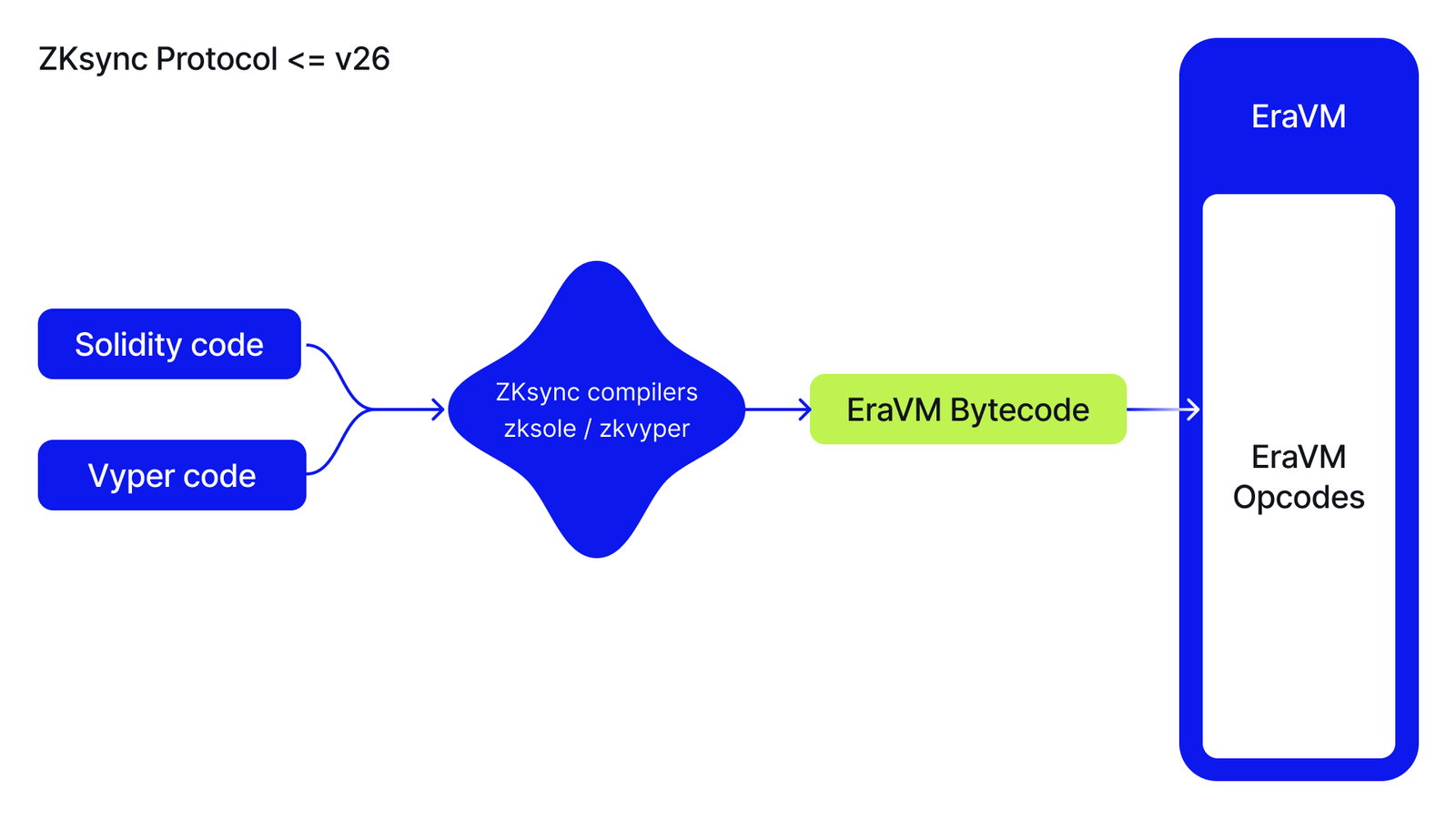
One of those trade-offs was not implementing a Type 2 ZK-EVM (which fully matches EVM bytecode) but instead designing a ZK-optimized and stable virtual machine: EraVM. This allowed ZKsync to launch much sooner, but it introduced differences from the EVM that affected developer experience and tooling compatibility.
Over the past two years, the team has made significant improvements to developer experience, refining tooling and addressing key pain points. However, despite these efforts, some teams were still unable to deploy their projects due to incompatibilities with EraVM, while others simply required full EVM equivalence to maintain consistency with their existing codebase. The demand for a solution that allows unmodified EVM bytecode to run seamlessly on ZKsync was clear and today we’re addressing that.
While EVM Equivalence is here today, we want to make it even better in the future:
The EVM Interpreter, included in protocol upgrade v27, is a significant milestone, adding EVM equivalence to ZKsync Sepolia testnet, and soon to all ZK Chains.
With the introduction of the EVM Bytecode Interpreter, developers can now deploy and execute unmodified EVM bytecode, eliminating the need for custom compilers or modified tooling.
create and create2 generate the same addresses as they would on Ethereum.delegatecall, which is not supported across environments.To further improve compatibility, the interpreter includes pre-deployed contracts for common use cases:
0x4e59b44847b379578588920cA78FbF26c0B4956C0x13b0D85CcB8bf860b6b79AF3029fCA081AE9beF20xce0042B868300000d44A59004Da54A005ffdcf9f0x914d7Fec6aaC8cd542e72Bca78B30650d45643d70xcA11bde05977b3631167028862bE2a173976CA110x7A0D94F55792C434d74a40883C6ed8545E406D12
ZKsync’s EVM Interpreter allows developers to deploy and run unmodified EVM bytecode on top of EraVM. Instead of requiring contracts to be compiled into EraVM-specific bytecode, the interpreter interprets EVM opcodes at runtime, making it possible to use standard Ethereum tooling without modifications.
At a high level, here’s how it works:
For more details, read the EVM Emulator documentation.

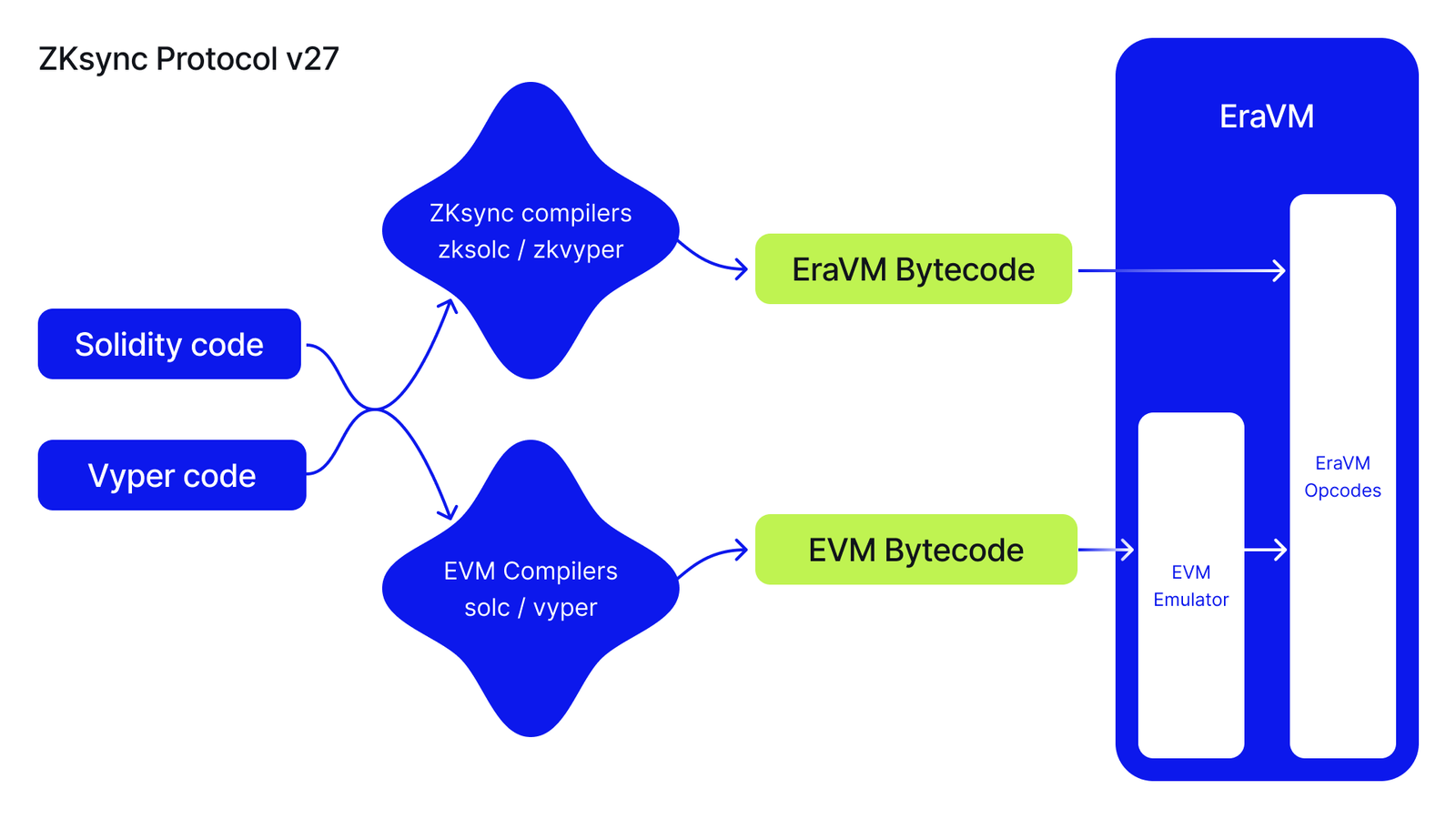
While the EVM Interpreter makes it easy to bring existing Ethereum contracts to ZKsync, EraVM-native bytecode remains the best choice for most projects due to its better performance and lower gas costs.
We recommend:
create2 address derivation or other EVM-specific behaviors.
While the EVM Interpreter significantly improves developer experience, there are still some limitations due to the underlying EraVM architecture:
CALLCODE, SELFDESTRUCT, BLOBHASH, BLOBBASEFEE and modexp, blake2f, pointEvaluation are not supported as they’re not implemented in EraVM yet.delegatecall Between EVM and EraVM Contracts is Not Supported.Learn more in the EVM Emulator documentation.
The EVM Interpreter is live on the ZKsync Era Sepolia testnet with mainnet activation planned in the weeks ahead, pending governance approval. The feature is available across the Elastic Network, meaning other ZK chains running v27 can enable the interpreter at any time.
The next version of the proof system, Boojum2.0, will allow native EVM execution, significantly reducing the costs of EVM equivalence.
We encourage developers to test the EVM Interpreter and share their feedback on our developer forum. Deploying an EVM contract on ZKsync Era is now as straightforward as deploying on Ethereum — no special compilers or modifications are required.
Prividium and NexBridge are bringing private, institution-controlled blockchain infrastructure to Japan, connecting regulated digital assets to Ethereum.

NexBridge and Matter Labs partner to bring Prividium to Japan’s financial institutions for private digital asset issuance, settlement and tokenization.


Matter Labs CEO Alex Gluchowski on open source as the answer to vendor dependency in financial infrastructure, and a central bank running public code.