



Prividium in Japan: a full stack platform for the world's most deposit-rich banking system
Prividium and NexBridge are bringing private, institution-controlled blockchain infrastructure to Japan, connecting regulated digital assets to Ethereum.

Published Dec 12, 2024
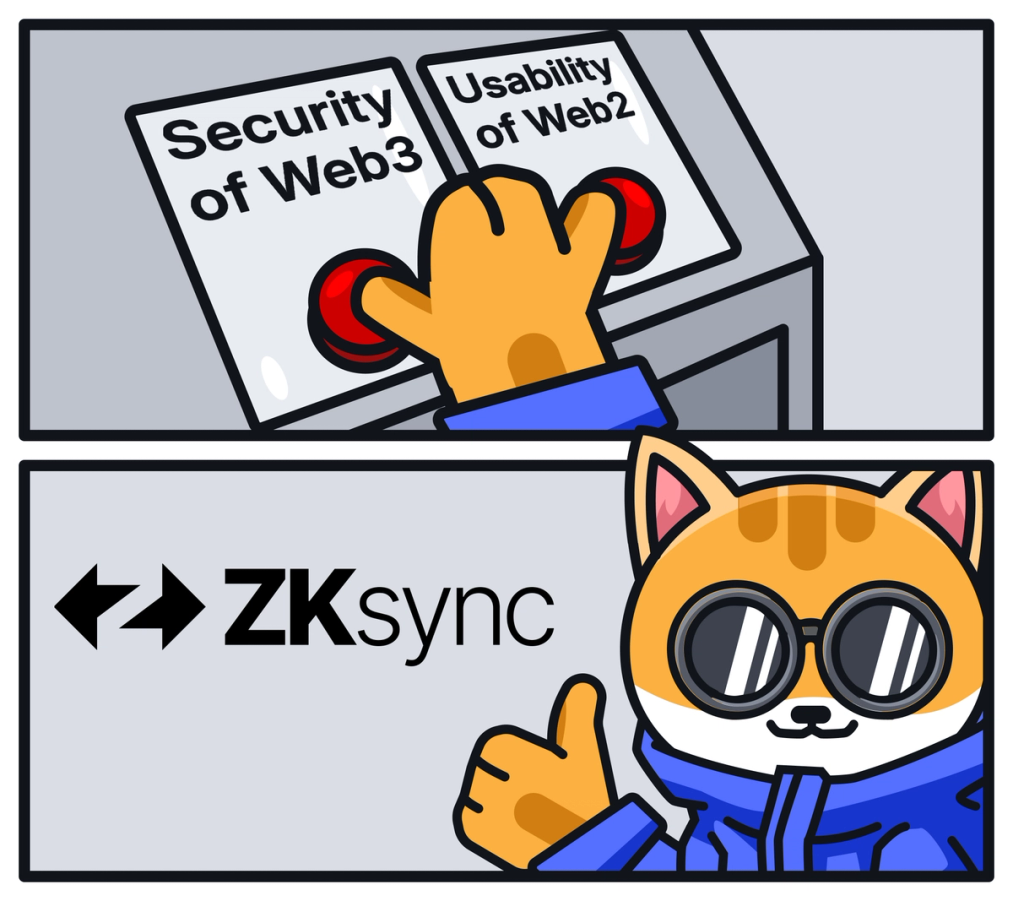
TL;DR: ZKsync is building Web3 that feels like the best of Web2. The elastic network of ZK chains delivers convenience, performance, security, verifiability, and connectivity all at once.

At the heart of ZKsync is the mission to advance personal freedom for all by accelerating mass adoption of crypto.
Our philosophy is rooted in three core insights:
In practice, we’re building the “Internet of Value” with no compromises—a verifiable, infinitely scalable world computer that enforces every rule and agreement through math, not trust in people. No one can twist the rules for personal gain, and everyone stands on equal ground, free to participate, create, and innovate.
We're at a pivotal moment of opportunity. Regulatory conditions are shifting, and crypto is on the verge of escaping its niche. If this momentum continues, everyday users may rely on it without even knowing, as AI-driven interfaces make blockchain interactions feel as effortless as checking email.
However, the next generation of Web2 builders venturing into blockchain will be disappointed by the state of developer tools, onboarding process, operational overhead, performance, privacy and UX. They care about functionality, not ideology, and if a centralized platform delivers a smoother, more intuitive developer experience, they’ll fall for it—no matter the long-term implications (many such cases, unfortunately). This creates a huge moral challenge for a values-driven industry.
But Web2 itself went through a similar growth curve. In its early days, developers had to choose between quick, convenient setups and secure, high-performance infrastructures. Managing servers, applying security patches, and constantly adjusting hardware to handle traffic spikes meant sacrificing ease of use or stability. Then the elastic cloud arrived and changed the game. It offered on-demand scaling, built-in security, and simple deployments—no trade-offs required. Suddenly, convenience and performance didn’t have to come at the expense of security, freeing builders to focus on innovation instead of overhead.
To stay true to its mission, it’s a duty for ZKsync to prevent Web3 from drifting into “just trust us” solutions. Learning from the history of Web2, this means offering an alternative genuinely better in every dimension. You shouldn’t have to choose between ease-of-use, performance and security.
ZKsync’s answer is to create an elastic, cloud-like development environment for builders that is simultaneously:
In other words, ZKsync is building Web3 without compromise.

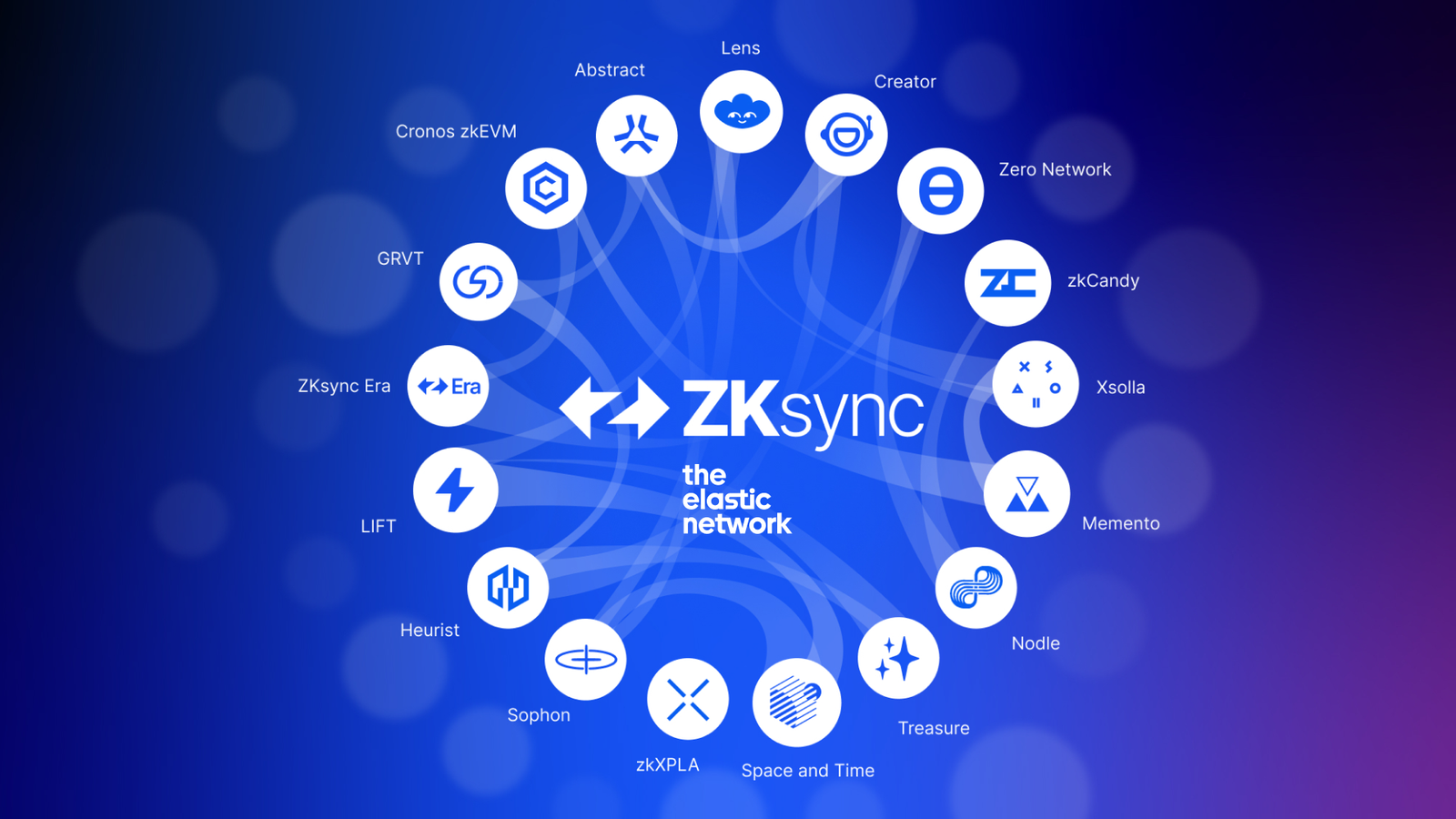
To onboard the whole world into crypto, many specialized chains must be able to coexist , work together, and share liquidity. In 2024, ZKsync took a step toward this multi-chain future by transforming ZKsync from a single L2 into an ever-expanding network of ZK chains — the Elastic Network.
ZK Stack was productized for multiple deployments, achieving increased data-efficiency, added support for biometric signing with RIP7212, integrating with frameworks such as Foundry and Viem. Governance was decentralized through a three-body model—Token Assembly, Security Council, and Guardians—ensuring that no single entity dictates protocol rules. With the deployment of v24, a foundation was laid for ZKsync 3.0 and a multi-chain architecture.
A vibrant ecosystem rapidly emerged as projects including Cronos (in partnership with Crypto.com), Zero Network, Abstract (Pudgy Penguins), Sophon, Xsolla, Lens Protocol, GRVT, TreasureDAO, Zepeto/Creator, ZKCandy (iCandy Interactive), Sovra (Quark ID), Com2Us/XPLA, Memento, Space and Time, LIFT (PlayFi), Tevaera, Nodle, and Heurist began building on the Elastic Network.

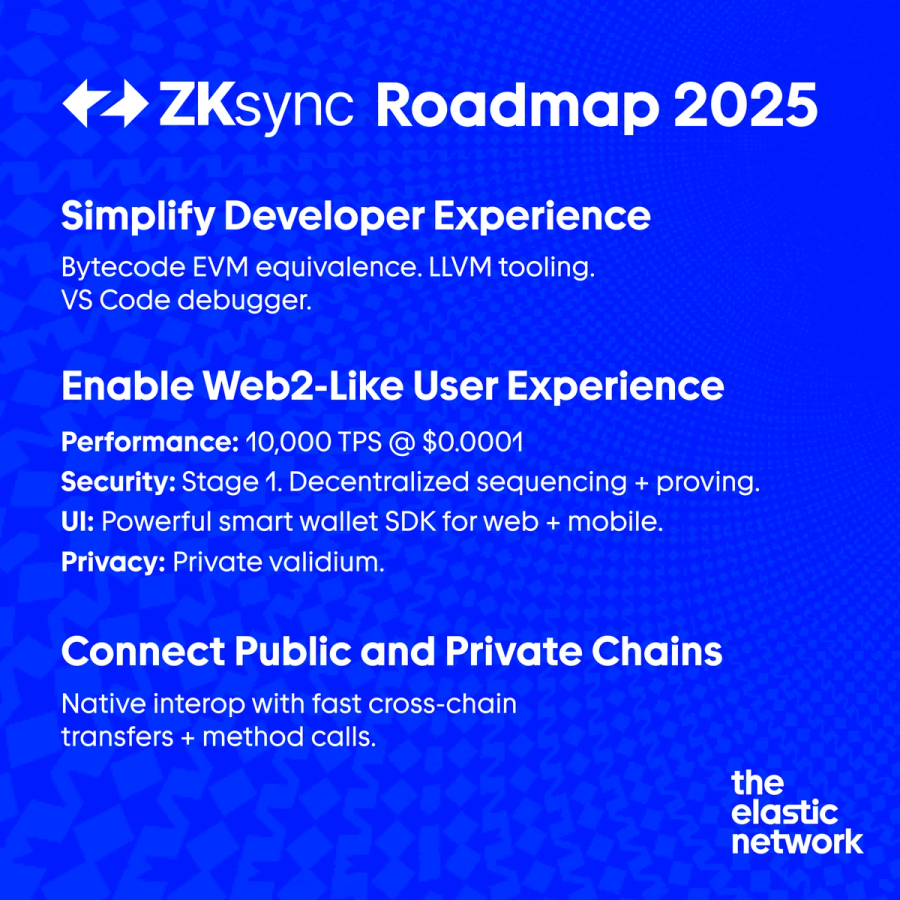
Building on the progress achieved in 2024, here is how the ZKsync strategy translates into practical objectives for the ZK Stack for 2025.
The absolute top priority for ZKsync is achieving EVM equivalence at the bytecode level. Boojum 2.0 and BoojumOS —new proof and operating layers—enable environment that supports all tools designed for L1.
In parallel, ZKsync is extending its advanced LLVM-based Solidity compiler with an EVM-bytecode backend, which will make smart contracts cheaper. As it matures, we aim to enable the VS Code debugger for EVM, followed by support for Web2 profilers, code coverage analysis, and IDEs for EVM. This will benefit not only ZKsync developers but anyone developing for an EVM-based chain.
Beyond EVM equivalence, BoojumOS opens the door to multi-VM support. This means Solidity contracts can interact with Rust-based WASM contracts and other RISC-V-compiled code within the same block. Such flexibility bridges the gap between crypto-native and Web2 backgrounds, ensuring that developers with traditional skill sets can step in and feel at home.
ZK-based architecture can radically outperform other Web3 scaling solutions. By using mathematical proofs for security instead of validator consensus, sequencer hardware can scale more aggressively, delivering higher throughput and lower latency. For users, this means higher transaction volumes and faster response times.
Work throughout 2024, such as pipelined block processing and refined Merklization, has already produced substantial efficiency gains for ZK Stack. The upcoming BoojumVM aims at 10,000 TPS at around $0.0001 proving cost per ERC20 transfer by the end of 2025. These numbers are ambitious, but our benchmarks suggest that they are achievable.
ZKsync’s ultimate goal is achieving Stage 2 rollup maturity, but reaching Stage 1 is now a near-term certainty. The only remaining step for Stage 1 is implementing a forced inclusion mechanism (priority queue), ensuring that all transactions are included onchain even if a sequencer attempts to exclude them. This critical improvement bolsters network resilience and maintains trustworthiness in the system’s core security guarantees.
Looking ahead, efforts are already underway to advance toward a fully decentralized rollup ecosystem. Decentralizing sequencing will allow multiple participants to join as block producers, potentially secured by a token-staking mechanism. In parallel, the Prover API project is laying the groundwork for fully decentralized proving by the end of 2025.
The wallet experience has stood as the greatest obstacle to mainstream adoption for far too long. ZKsync aims to completely reinvent the wallet design with smart accounts, delivering a seamless, intuitive, and secure feel that rivals today’s best Web2 products. This evolution is already underway with the introduction of ZKsync Smart Sign-On (SSO), which replaces seed phrases with biometric authentication and streamlines transaction approvals. The plan now is to push the boundaries further, ensuring both web and mobile interfaces feel as effortless and familiar as any application in traditional tech.

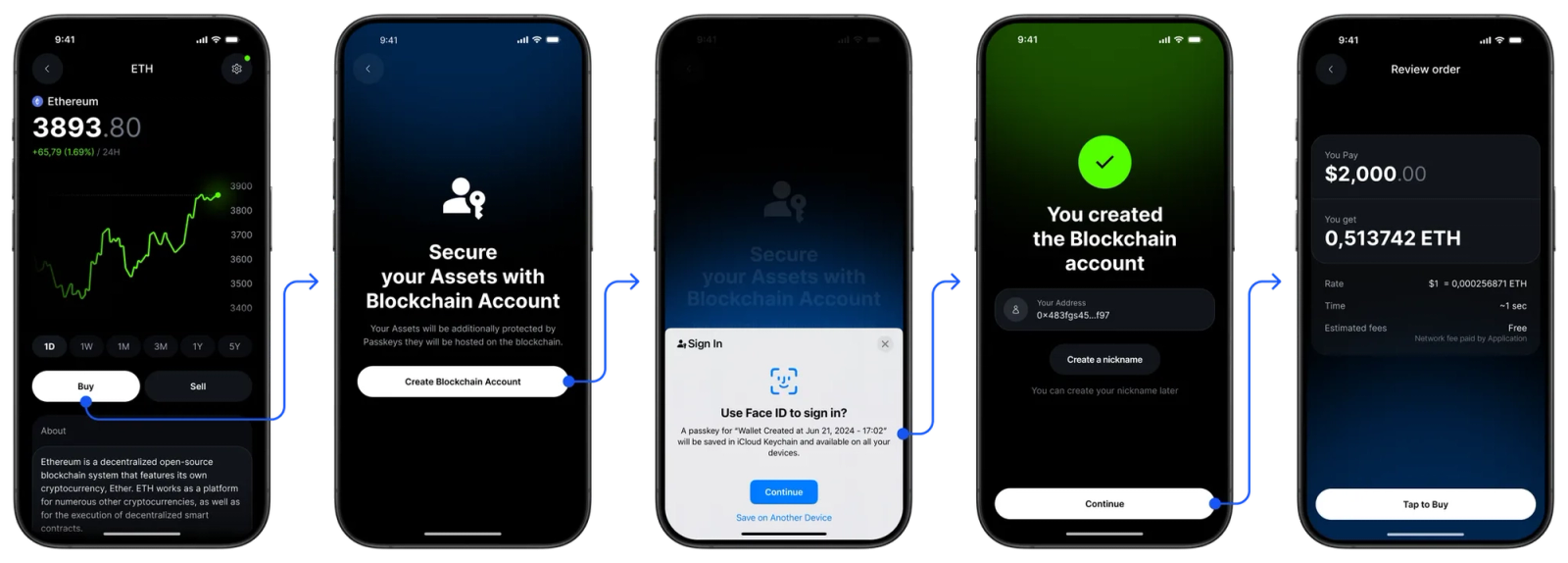
Large enterprises and Web2 platforms with extensive user bases can't move sensitive business logic onchain. ZKsync is building a private validium that provides them with chain-level privacy, similar to Web2-style data control. A permissioned set of validators will maintain a confidential state, revealing information only when necessary. This offers a quick solution for integrating sensitive business logic into the ecosystem.
Later, specialized protocols focused on account-level privacy will benefit from ZKsync’s cheaper native recursive ZK proof verification compared to other chains, enabled by BoojumOS and the state-diff architecture. This will give users complete control over their data.
ZKsync is building native, protocol-level cross-chain interoperability, to eliminate dependence on inefficient, insecure third-party bridges and create a unified liquidity space. It enables fast transfers/swaps of arbitrary tokens, passing messages, and even remote procedure calls—without additional trust assumptions or high L1 fees.
The unique property of ZKsync interop architecture is the ability to connect public and private chains. This opens a way for unprecedented synergy between web3-native, enterprise- and institutional ecosystems, since private chains could previously only operate in complete isolation. The ongoing improvements to tools, libraries, and wallets will continue, enabling the Elastic Network to operate as smoothly as a single chain.
Era, the first ZK chain in the ZKsync network, will play a critical role supporting the Elastic Network and operate as a vibrant hub facilitating several key functions including:
These are my personal thoughts and suggestions. ZKsync recently celebrated its sixth anniversary, evolving over years from a pioneering tech project into a thriving ecosystem with a vibrant and passionate community. As the founder, I thought it would be a great moment to reflect on our journey and outline the priorities for 2025 to ignite a meaningful discussion for the upcoming year.
Please join the discussion on the ZK Nation forum and share your thoughts:
https://forum.zknation.io/t/zksync-2025-technical-roadmap/374
Prividium and NexBridge are bringing private, institution-controlled blockchain infrastructure to Japan, connecting regulated digital assets to Ethereum.

NexBridge and Matter Labs partner to bring Prividium to Japan’s financial institutions for private digital asset issuance, settlement and tokenization.

Matter Labs CEO Alex Gluchowski on open source as the answer to vendor dependency in financial infrastructure, and a central bank running public code.