


Prividium in Japan: a full stack platform for the world's most deposit-rich banking system
Prividium and NexBridge are bringing private, institution-controlled blockchain infrastructure to Japan, connecting regulated digital assets to Ethereum.

Published Oct 22, 2024
---
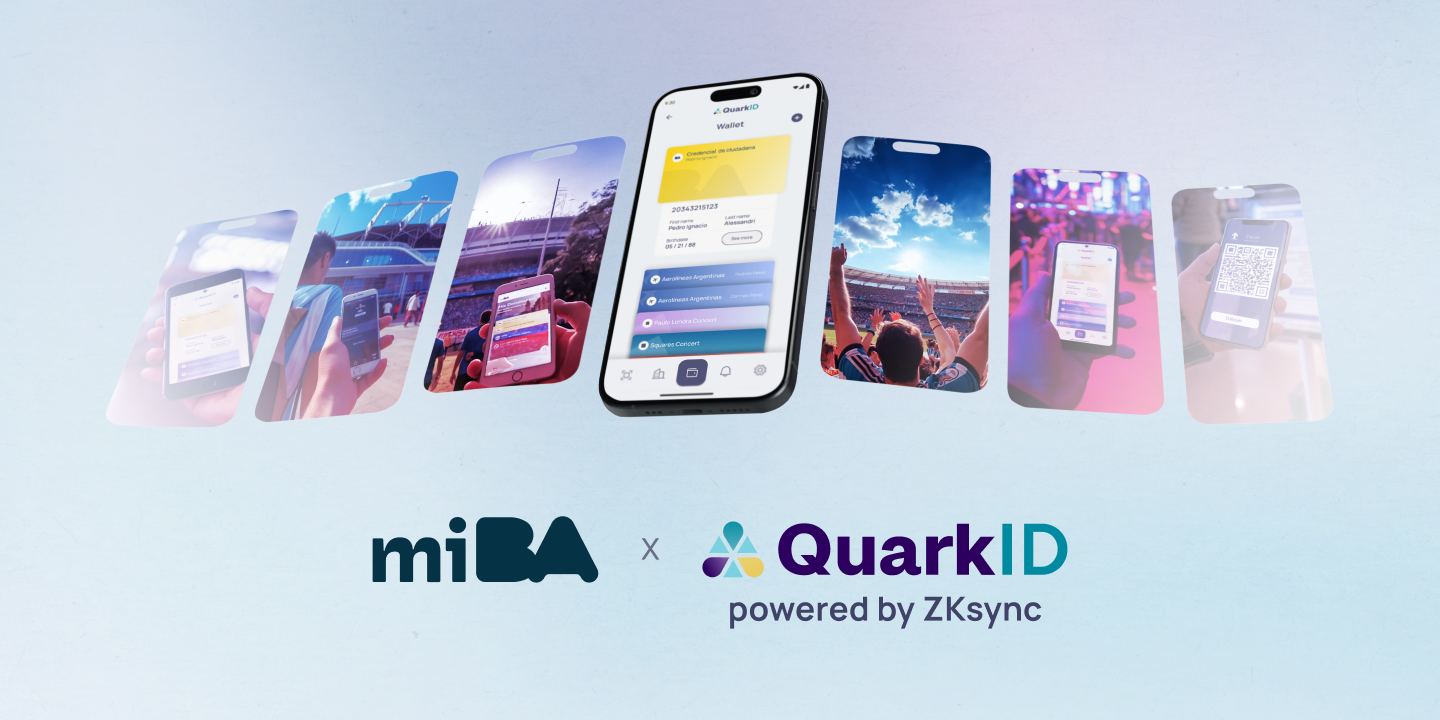
Today, the Government of the City of Buenos Aires announced the integration of QuarkID, a ZKsync-powered decentralized identity solution, into its miBA platform. This groundbreaking initiative makes Buenos Aires the first city worldwide to implement blockchain and zero-knowledge cryptography for creating self-sovereign digital identities. By empowering 3.6 million residents with enhanced control over their personal data, the city sets a new standard in privacy and security for digital identity management. All governments own their citizens’ data, Buenos Aires is the first to relinquish control.
Starting in October of 2024, all active users of miBA, the city's digital platform for accessing government services and documents, received their own decentralized digital identity (DID). These DIDs are secured by QuarkID's wallet and settled on Era, a Layer 2 blockchain powered by ZKsync. This initiative positions Buenos Aires as a pioneer in transforming government services through blockchain technology, setting a new global standard for privacy-focused digital identity.
For blockchain to scale, we need to ‘hide the wires’. While infrastructure and technology are summarily important, the benefits they give to individuals are what is most important. The technology should simply be better, safer, and more private than the alternative. When you ask an average citizen if they’ve used email, nearly everyone will say yes. If you ask that same group how many of them have heard of TCP/IP, then a very small percentage will claim they have. If you ask them how it works, an even smaller number of people will be able to articulate the basics. In Web3, there is too much emphasis on the underlying technology.
Buenos Aires is leading the way to future mass adoption by taking their existing centralized identity solution, named miBA, and replacing the backend with QuarkID. QuarkID is a decentralized, open-source, digital public good that offers digital identity and a trust framework, powered by ZKsync Era in order to deliver privacy, security, and scalability for citizens and the government alike.
Overnight, 3.6m citizens have had their credentials upgraded to being blockchain based – which greatly enhances security and interoperability amongst other benefits – without the individuals needing to be informed on the necessity for blockchain or zero-knowledge cryptography. No seed phrases needed. Users simply see an improved application that offers updated features, new credentials, greater usability, shortens their wait times, and reduces the amount of government tasks they need to do in person. Now they can do everything from receiving tax benefits to proving education status, all from the convenience of their laptops and mobile devices.
In a world where governments and institutions traditionally own and manage citizens' data, Buenos Aires is turning the model upside down by giving citizens direct ownership of their personal information. Through QuarkID, individuals can now access, store, and share their verified credentials — like birth certificates or tax documents — securely and independently.
This self-sovereign identity (SSI) approach gives citizens control over their personal data. Rather than relying on physical documents that expose unnecessary information, such as a full name or address when proving one's age, residents can now verify their credentials peer-to-peer through their mobile devices. This guarantees that no third party, including the government, can track when, how, or why a credential is being used. This is distinct from existing centralized identity platforms where governments have complete oversight into how and when digital identities are accessed and verified. In Buenos Aires’ case, by using QuarkID, all verifications are P2P which ensures that the government is not alerted when citizens use their credentials.
Jorge Macri, Chief of Government of the City of Buenos Aires, commented on the news: “The incorporation of zero-knowledge blockchain technology into the City's digital identity system is an unprecedented milestone that positions us globally as a leader and once again demonstrates that the City of Buenos Aires is at the forefront of innovation. Adopting new technologies that simplify citizens' processes while giving them full control over their information is a fundamental step toward continuing to offer more secure and transparent digital solutions."
At the core of this initiative is QuarkID’s open-source digital trust framework powered by ZKsync’s zero-knowledge proof blockchain technology, which brings a new level of security, privacy, and transparency to how personal data is managed:
“We’ve seen a lot of blockchain-based innovation in financial services, but this initiative demonstrates the power of blockchain to revolutionize other uses cases such as government services by empowering citizens to safely and securely own their data,” said Diego Fernandez, Secretary of Innovation and Digital Transformation of the City of Buenos Aires. “By giving residents control over their identities, we’re not only improving privacy and security, but we’re also setting the foundation for a future where personal data ownership is a basic right, protected by advanced zero-knowledge-based cryptographic proofs.”
How does the current implementation of Digital Identity from the City of Buenos Aires operate?
Since the initial announcement of QuarkID in September 2023, Buenos Aires has worked closely with partners such as Extrimian to transition miBA’s centralized system to a decentralized one. QuarkID allows residents to view, download, and share documents while also serving as the login portal for all government systems to schedule appointments, carry out procedures, or submit requests. Citizens can now access any of the City’s systems (previously miBA login) by simply scanning a QR code—no password required.
With the integration of QuarkID, miBA users will have access to over 60 digital documents and certificates, including but not limited to:
In the coming months, additional documents, such as driver’s licenses, public space permits, and high school diplomas, will be added. This innovation will also allow users to add credentials from other organizations that adopt the QuarkID protocol, enhancing the platform’s versatility and usability.
QuarkID enables the superpower of being able to prove an individual is 1. Who they say they are 2. Is from a specific region/country 3. Has their credentials and information up to date. With these items as ‘provable’, QuarkID opens the doors for many new government and business-specific applications that were difficult, if not impossible, before.
Verified benefits for citizens of a certain region
Safer interaction with government officials
Voting
Sports Affiliations
Loyalty
Banks
Currently there have been a range of Digital Identity platforms released globally. Some are government backed and issued such as Aadhar in India, Sing Pass in Singapore, Eidas in Europe and more. These all adhere to the W3C standards, which ensures interoperability which QuarkID also is built upon. The difference between miBA’s implementation and the above is that the aforementioned Digital Identity Solutions are all centralized, meaning the governments not only have ownership and control, but also traceability and tracking lacking the transparency and sovereignty which a technology leveraging QuarkID does.
The above platforms, while far reaching, are at risk of being honey-pot attack vectors, which has been seen with repeated successful hacks of these systems. QuarkID by enabling decentralization + interoperability reduces these attack vectors through having multiple issuing bodies. Additionally, by leveraging zero-knowledge technology no PII is ever exposed through on chain activity. The immutable record only hosts DIDs, of which the underlying information is encrypted beyond reconstruction.
Other blockchain based identity systems, such as World Coin, operate in a different context. World Coin is incredible at proving a human is a human and there are no duplicates. However, these identities are not associated with any attributes like citizen data (which is issued by governments). So while Zero Knowledge technology is at play, the usability and adoption curves are quite different.
Will QuarkID expand beyond Buenos Aires?
As an open-source Digital Public Good, QuarkID invites developers, enterprises, and institutions to contribute to its continued growth. The framework offers a secure, decentralized infrastructure that can be adapted for secure logins, identity verification, and even loyalty programs across various industries.
Developers: Contribute to QuarkID’s core protocol to help expand secure login capabilities for citizens. Learn more and get involved through the open-source codebase at the protocol’s GitHub. Integrate QuarkID into your project or solution - reach out to Extrimian to leverage their ID Connect APIs to simplify the process of integration and implementation.
Private Enterprises: Banks, sports teams, and businesses are encouraged to enable secure logins and offer exclusive benefits to verified citizens, helping build a more secure and engaging ecosystem for everyone.
Governments: If you’re looking to implement the most-trusted, permissionless Digital Identity framework be sure to get in touch with the team at Extrimian to explore how to implement ZK-backed Digital Identity for your citizens.
Citizens of Buenos Aires: If you’re a resident of the City of Buenos Aires, you can access miBA with QuarkID enabled today through iOS, Android or webapp and start owning your identity today. Many more credentials and benefits are coming down the line.
miBA is the digital platform for accessing services and documents issued by the Government of Buenos Aires. Used by more than 3.6 million residents, miBA offers secure access to government services, document viewing, and management, all from a mobile app. Now, with the integration of QuarkID technology, miBA is taking a major step toward self-sovereign digital identity, giving citizens more control and security over their personal data.
QuarkID is a digital protocol that implements a new trust framework for creating and managing digital identities and all their credentials in a decentralized manner, using asymmetric cryptography and the immutability of the blockchain to establish trust in a digital world. It is open-source and based on international standards such as those from W3C, Trust Over IP, and Decentralized Identity Foundation. It is designed to be interoperable with other protocols created around the world.
Extrimian is a leading company in Latin America specializing in digital identity solutions on the blockchain. Its mission is to empower individuals and organizations through decentralized technologies that allow full control over digital identity and personal data.
ZKsync leverages cutting-edge zero-knowledge (ZK) technology to create secure, scalable, and interoperable blockchain solutions. Through its ZK Stack framework, ZKsync enables developers, enterprises, and financial institutions to deploy customizable ZK Chains, forming the Elastic Chain ecosystem. This innovative network offers native, trustless interoperability, enhanced privacy, and unparalleled scalability while maintaining Ethereum's security. ZKsync's mission is to bring crypto to the mainstream, empowering millions of developers and billions of users with digital self-ownership and personal freedom. To learn more, visit zksync.io.
Prividium and NexBridge are bringing private, institution-controlled blockchain infrastructure to Japan, connecting regulated digital assets to Ethereum.

NexBridge and Matter Labs partner to bring Prividium to Japan’s financial institutions for private digital asset issuance, settlement and tokenization.

Matter Labs CEO Alex Gluchowski on open source as the answer to vendor dependency in financial infrastructure, and a central bank running public code.